What Is the Trundholm Sun Chariot and What Secret Does It Hide?
June 19, 2026
The Trundholm Sun Chariot is a 3,400-year-old Bronze Age artifact discovered in Denmark that depicts a horse pulling the sun across the sky, with its secret being that the golden disc is gilded on only one side to represent both day and night. This extraordinary bronze model encodes ancient astronomical knowledge and cosmological beliefs that may have influenced later Norse mythology.
Discovery in a Danish Bog
In 1902, a Danish farmer plowing his bog field made one of archaeology’s most remarkable discoveries. His plow struck what appeared to be an impossible sight: a perfectly preserved bronze horse pulling a golden disc mounted on spoked wheels, buried in the earth for over three millennia. The artifact had been protected by the bog’s unique preservative conditions, emerging as if frozen in time from around 1400 BCE during the Nordic Bronze Age.
The discovery location in Trundholm, Zealand, gave the artifact its name and provided crucial context about Bronze Age settlement patterns in Denmark. Bog discoveries like this one offer unparalleled glimpses into ancient life because the acidic, oxygen-poor environment prevents decay that would normally destroy organic and metallic materials.
Extraordinary Bronze Age Craftsmanship
The Trundholm Sun Chariot showcases the sophisticated metalworking skills of Nordic Bronze Age artisans. The bronze horse stands on a wheeled platform, connected to a large disc that represents the sun. Every surface displays intricate decorative work, with spirals and concentric circles covering the disc in mesmerizing patterns.
The craftsmanship reveals advanced techniques in bronze casting, gold working, and decorative arts that challenge assumptions about “primitive” ancient societies. The spoked wheels themselves represent cutting-edge technology for the time, suggesting the artifact was created by highly skilled specialists who understood both metallurgy and symbolic representation.
The Hidden Astronomical Secret
The most intriguing aspect of the sun chariot lies in its asymmetrical design. The golden disc is gilded with precious metal on only one side, while the reverse remains dark bronze. Archaeologists believe this wasn’t an oversight or economy measure, but a deliberate representation of cosmic cycles.
One side represents the blazing daytime sun traveling across the visible sky, while the dark side symbolizes the hidden night sun’s journey through the underworld. This sophisticated understanding of solar cycles demonstrates that Bronze Age peoples possessed complex astronomical knowledge and cosmological frameworks for understanding celestial movements.
Connections to Norse Mythology
Scholars have identified striking parallels between the sun chariot and later Norse mythological traditions. The concept of a horse pulling celestial bodies across the sky appears in stories of Skinfaxi, the horse who draws daylight across the heavens, and Hrímfaxi, who brings night.
These connections suggest that Norse mythology, recorded much later during the Viking Age, may preserve Bronze Age religious and cosmological traditions spanning thousands of years. The sun chariot thus provides a rare glimpse into the deep roots of Scandinavian spiritual beliefs and their remarkable continuity across millennia.
Modern Display and Significance
Today, visitors can view the Trundholm Sun Chariot at the National Museum of Denmark in Copenhagen, where it stands as one of the museum’s most prized artifacts. The piece continues to inspire researchers studying Bronze Age religion, astronomy, and craftsmanship, offering insights into how ancient humans understood their place in the cosmos.
This 3,400-year-old bronze model represents far more than artistic achievement—it embodies humanity’s enduring quest to comprehend and represent the fundamental forces that govern our world.
FREQUENTLY ASKED
When was the Trundholm Sun Chariot discovered? ▾
The Trundholm Sun Chariot was discovered in 1902 by a Danish farmer plowing his bog field in Trundholm, Zealand.
How old is the Trundholm Sun Chariot? ▾
The Trundholm Sun Chariot is approximately 3,400 years old, dating to around 1400 BCE during the Nordic Bronze Age.
Why is only one side of the sun disc golden? ▾
The disc is gilded on one side to represent the bright daytime sun and left dark on the other side to symbolize the hidden night sun's journey through the underworld.
Where can you see the Trundholm Sun Chariot today? ▾
The Trundholm Sun Chariot is displayed at the National Museum of Denmark in Copenhagen.
What is the connection between the sun chariot and Norse mythology? ▾
The chariot's concept of a horse pulling the sun across the sky parallels later Norse myths like Skinfaxi, suggesting Bronze Age origins for these mythological traditions.
What materials were used to make the Trundholm Sun Chariot? ▾
The artifact is made of bronze for the horse and wheels, with one side of the sun disc covered in gold leaf or gilding.
GO DEEPER
KEEP EXPLORING
 0:43
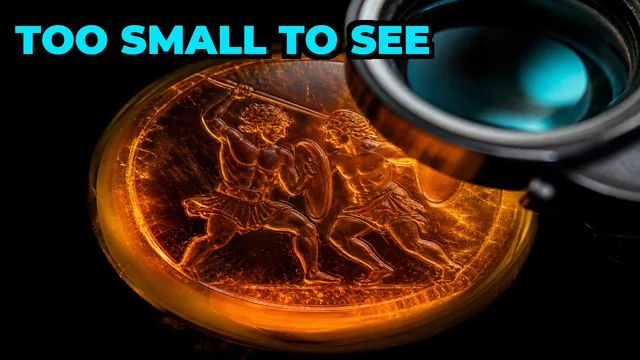
0:43This 3,500yr-Old Gem Hides Carvings Too Small To See 🔍
Sep 17, 2026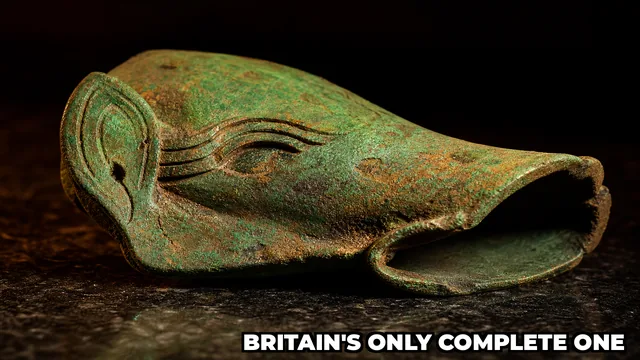 0:26
0:26Britain's Only Complete Celtic Battle Horn 🎺
Sep 17, 2026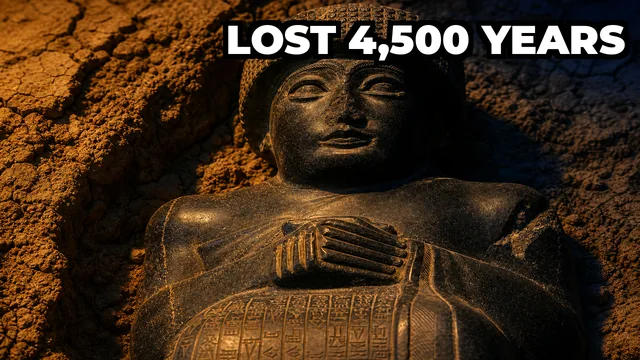 0:42
0:42Archaeologists Found What 140 Years of Digging Missed 😱
Sep 16, 2026 0:39
0:399,000-Year-Old Figures Buried Face-Up 👁️ Why?
Sep 15, 2026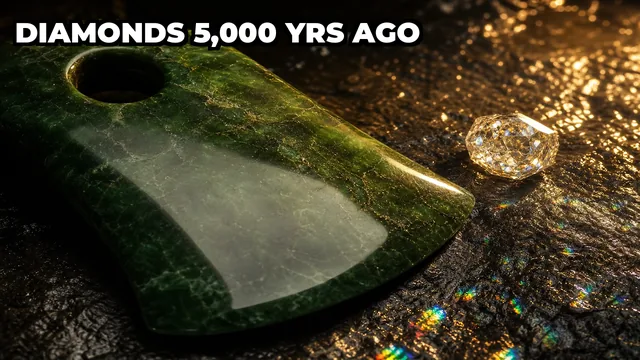 0:26
0:26How Did A Lost Civilization Polish With Diamonds? 💎
Sep 14, 2026 0:30
0:30