Why Do Almost-Human Faces Trigger Fear and Disgust?
March 28, 2026
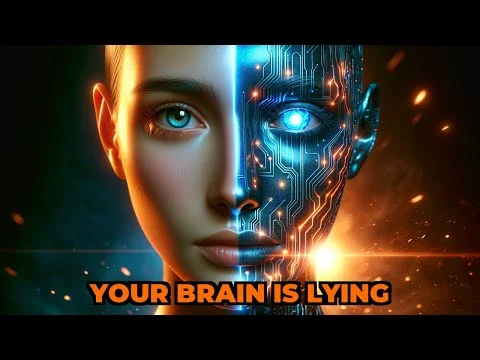
Almost-human faces trigger fear because they activate an ancient survival mechanism called the uncanny valley effect, where your brain detects micro-errors in facial features that signal disease, death, or deception. This evolutionary kill switch protected our ancestors from threats that appeared human but weren’t quite right.
The Discovery of the Uncanny Valley
Japanese roboticist Masahiro Mori first identified this phenomenon in 1970 while studying human reactions to increasingly human-like robots. He discovered that as robots became more human in appearance, people’s affection for them increased steadily—until a critical threshold was crossed. At that point, positive feelings collapsed into profound unease and revulsion.
Mori mapped this relationship on a graph that resembled a valley, coining the term “uncanny valley” to describe the sharp drop in comfort when artificial beings became almost, but not quite, human. The closer something gets to human without achieving perfect human likeness, the more disturbing it becomes.
Your Brain’s Ancient Terror Code
This reaction isn’t a modern glitch—it’s a finely-tuned survival system. Your brain constantly scans faces for signs of health, trustworthiness, and species recognition. When it encounters a face that’s almost right but contains subtle errors, it triggers an immediate danger response.
Scientists believe this mechanism evolved to help our ancestors avoid several threats: corpses (which could carry disease), individuals with severe illness or genetic abnormalities (potential mates with poor genes), and potentially members of hostile groups who might be disguising themselves. Those who trusted faces that triggered these warning signals were less likely to survive and reproduce.
The brain detects these micro-errors in ways you can’t consciously identify—slightly wrong proportions, unnatural eye movements, skin texture that doesn’t quite match human norms, or expressions that don’t align perfectly with human emotional patterns. Your conscious mind can’t pinpoint what’s wrong, but your ancient threat-detection system screams danger.
The Modern Uncanny Valley Crisis
Today, this survival mechanism fires constantly as we encounter AI-generated faces, CGI characters in movies, and increasingly sophisticated humanoid robots. Social media platforms flood users with synthetic faces that trigger low-level anxiety without people understanding why. Dating apps struggle with AI-generated profile photos that users instinctively swipe away from.
Video game developers and film studios spend millions trying to cross the uncanny valley successfully. Even slight imperfections in digital humans can ruin audience immersion and create an atmosphere of unease that undermines storytelling.
The Protective Power of Disgust
This ancient terror code remains active because it continues to serve protective functions. In an era of deepfakes and increasingly sophisticated AI, your brain’s ability to detect “almost human” faces may be more valuable than ever. That uncomfortable feeling when viewing certain digital faces could be your evolutionary alarm system working exactly as designed.
The uncanny valley effect demonstrates how modern technology can activate prehistoric survival mechanisms, creating a bridge between our ancient past and digital future. Understanding this response helps explain why certain AI interfaces feel wrong and why achieving truly convincing artificial humans remains one of technology’s greatest challenges.
FREQUENTLY ASKED
What is the uncanny valley effect in psychology? ▾
The uncanny valley effect is a psychological phenomenon where almost-human faces or robots trigger fear and disgust because they're similar enough to humans to seem familiar, but different enough to activate evolutionary threat-detection systems.
Why do AI-generated faces look creepy? ▾
AI-generated faces often contain subtle micro-errors in proportions, skin texture, or expressions that your brain recognizes as "almost but not quite human," triggering the same survival instincts that once protected humans from disease or deception.
How do you overcome the uncanny valley in robotics? ▾
Roboticists overcome the uncanny valley either by making robots clearly non-human (avoiding the valley entirely) or by achieving near-perfect human realism through advanced materials, movements, and facial expressions.