Why Do Almost-Human Faces Trigger Fear and Disgust?
March 29, 2026 · 5 min read
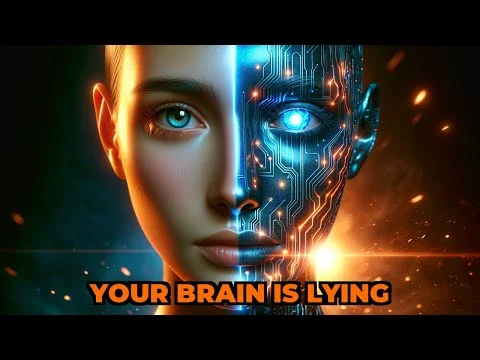
Almost-human faces trigger fear and disgust because of the uncanny valley effect, a neurological response where our brains simultaneously activate human recognition and threat detection systems when viewing near-human but imperfect faces. This creates a psychological conflict that our ancient brain interprets as a potential danger, triggering the same neural pathways used to detect disease, death, or contamination.
The Discovery That Changed Robotics Forever
In 1970, Japanese roboticist Masahiro Mori made a disturbing observation that would reshape our understanding of human psychology. While studying how people reacted to increasingly human-like robots, he discovered that positive responses increased with human resemblance—but only to a point. At near-perfect human appearance, people’s emotional responses suddenly plummeted into revulsion and fear.
Mori called this phenomenon “Bukimi no Tani” or the “Valley of the Uncanny.” What made his discovery extraordinary was that he had no advanced brain imaging technology—just careful observation of human behavior. Fifty years later, neuroscientists would prove he had identified one of the most fundamental aspects of human cognition.
Your Brain’s Ancient Warning System
Modern neuroscience has revealed exactly why the uncanny valley exists. Brain imaging studies show that when people view almost-human faces, two specific brain regions activate simultaneously: the area responsible for human facial recognition and the region that processes threat detection. This creates a neurological short circuit where your brain cannot determine whether it’s looking at a person or a predator.
Researchers at Caltech discovered that uncanny valley responses activate the same neural pathways as disgust—the same biological systems that react to rotting food, contaminated water, or other survival threats. Your brain processes an almost-human face with the same urgency it reserves for potentially lethal dangers.
Even more remarkably, this response appears hardwired from birth. Studies show that babies as young as three months old exhibit uncanny valley reactions, displaying elevated heart rates and turning away from near-human robotic faces. This isn’t learned behavior or cultural conditioning—it’s an evolutionary inheritance embedded in the deepest layers of human neurology.
The Evolutionary Origins of Fear
The existence of this response puzzled scientists for decades. Why would evolution build an aversion to something that didn’t exist in the ancestral environment? The answer, when researchers finally discovered it, was both elegant and disturbing.
The leading evolutionary theory suggests that the uncanny valley response evolved as a survival mechanism to help our ancestors identify the dead, diseased, or genetically unfit. A face that appears almost human but slightly “wrong” could indicate dangerous illness, recent death, or genetic abnormalities that might threaten group survival. Your revulsion at uncanny faces is essentially a 500,000-year-old immune system operating through visual processing.
Beyond Robots: The Uncanny Valley in Daily Life
The uncanny valley extends far beyond robotics into everyday human experience. Excessive Botox treatments can trigger mild uncanny valley responses because they freeze the micro-expressions that normally communicate emotion. The face appears young and smooth, but the absence of natural muscle movement signals something “not quite right” to observers.
This reveals a crucial aspect of the phenomenon: it’s not just about appearance but about the synchrony between appearance and behavior. Ventriloquist dummies and certain clowns terrify children not because they look strange, but because their faces match human templates while their movements violate human behavioral patterns.
Horror movie directors have unknowingly exploited this response for decades. Films like “The Shining,” “The Exorcist,” and “Hereditary” use subtle disruptions to human movement, facial expressions, and eye contact to trigger the ancient wrongness detector in viewers’ brains.
Artificial Intelligence and the Valley
Perhaps the most extraordinary recent discovery involves artificial intelligence independently learning about the uncanny valley. In 2016, Google’s DeepMind trained an AI to generate human faces. Without any programming instructions about human psychology, the AI learned to avoid creating uncanny valley responses through pure pattern recognition.
The AI identified seventeen specific micro-features of human faces that trigger uncanny responses, including the ratio of sclera to iris in eyes, precise timing of eyelid closure, and micro-asymmetries in natural muscle movement. This artificial system understood the uncanny valley more precisely than the humans who named it.
These seventeen features now power deepfake detection software, as artificially generated faces almost always fail on at least one uncanny valley parameter. Your ancient evolutionary instinct has become the foundation for sophisticated lie-detection technology fighting disinformation and AI-generated propaganda.
The Sound of Uncanny
Recent research has expanded the uncanny valley beyond visual stimuli. Princeton researchers discovered that artificially synthesized voices trigger measurable uncanny valley responses even when they pass all audio quality tests. The problem isn’t obvious robotic sounds but the absence of involuntary micro-variations in pitch, breath, and rhythm that characterize genuine human speech.
More disturbing still, researchers found that real humans can fall into the uncanny valley. Neurological conditions affecting facial muscle control, medications suppressing micro-expressions, or extreme emotional suppression can cause others to subconsciously register a person as uncanny, leading to social rejection or professional discrimination.
Beyond the Valley
Studies in 2023 revealed something hopeful: the uncanny valley has an exit. When researchers made robot faces completely indistinguishable from humans, participant comfort didn’t just recover—it surged beyond baseline levels. People reported feeling stronger connections to perfectly human-like robots than to actual humans in the study.
This suggests that as artificial beings become truly indistinguishable from humans, the uncanny valley response may disappear entirely, potentially opening new frontiers in human-AI interaction and connection.
FREQUENTLY ASKED
Why do babies show uncanny valley responses? ▾
Babies as young as three months old show uncanny valley responses because this fear is hardwired into human neurology from birth, not learned through experience or culture.
Can real humans trigger the uncanny valley effect? ▾
Yes, real humans can trigger uncanny valley responses when neurological conditions, medications, or extreme emotional suppression affect their facial expressions and micro-movements.
How do horror movies use the uncanny valley? ▾
Horror movies exploit the uncanny valley by using subtle disruptions to human movement, facial expressions, and eye contact that trigger the brain's ancient threat detection systems.