How Long Does It Take a Rock to Fall Off the Tallest Cliff in the Solar System?
July 9, 2026
The Short Answer
A rock dropped from the top of Verona Rupes — the tallest known cliff in the solar system — would take 8 to 12 minutes to reach the bottom, drifting silently through the near-vacuum above Miranda, a small moon of Uranus.
What Is Verona Rupes?
Verona Rupes is an enormous escarpment located on Miranda, one of Uranus’s moons. It stands approximately 20 kilometers (about 12.4 miles) high, making it more than twice the height of Mount Everest, which tops out at roughly 8.8 kilometers above sea level. By comparison, the tallest cliffs on Earth barely scratch 1 kilometer. Verona Rupes is not just the tallest cliff on Miranda — it is the tallest confirmed cliff anywhere in the solar system that we know of.
Why Does a Rock Fall So Slowly?
The answer comes down to gravity. Miranda is tiny — only about 470 kilometers in diameter — and its gravitational pull is extraordinarily weak, roughly 0.8% of Earth’s surface gravity. On Earth, a rock dropped from 20 kilometers would accelerate rapidly and strike the ground in under a minute. On Miranda, that same rock barely accelerates at all. It drifts downward in eerie slow motion for somewhere between 8 and 12 minutes before finally settling at the base of the cliff. There is no atmosphere to carry any sound, no wind to disturb the fall. Just an extraordinary silence and an almost incomprehensible drop.
A Moon That Rebuilt Itself
Miranda’s story does not stop at its record-breaking cliff. The moon itself is one of the strangest objects in the solar system. Its surface is a chaotic patchwork of wildly different geological features — ancient cratered plains sitting alongside young, jagged canyons and strange chevron-shaped ridges called coronae. Scientists have proposed that Miranda may have been catastrophically shattered by an ancient collision with another body, and then gravity slowly pulled the broken fragments back together in completely scrambled order. The result is a moon that looks almost stitched together from mismatched pieces — a geological puzzle that researchers are still working to fully explain.
What We Know — and Don’t Know
Everything we understand about Miranda comes from a single, fleeting encounter. Voyager 2 flew past the Uranian system in January 1986 and captured images of Miranda during its closest approach. It has been the only spacecraft ever to visit. The imagery it returned was groundbreaking but limited — only about 40% of Miranda’s surface was imaged at any useful resolution, and much of what Voyager 2 saw raised more questions than it answered. Verona Rupes itself was imaged in oblique lighting that made its true scale difficult to measure precisely, which is why estimates of its height still carry some uncertainty.
Why Miranda Matters
Miranda is a reminder of how much the outer solar system still has to teach us. A 20-kilometer cliff on a shattered, gravity-reassembled moon orbiting a planet we have visited exactly once — it is the kind of place that makes the universe feel genuinely alien. Future missions to the Uranian system are currently under discussion, and scientists hope that a dedicated orbiter could finally map Miranda in full and answer the lingering questions Voyager 2 left behind. Until then, Verona Rupes remains one of the most dramatic and least understood landforms anywhere in our cosmic neighborhood.
FREQUENTLY ASKED
How tall is Verona Rupes compared to Mount Everest? ▾
Verona Rupes is approximately 20 kilometers tall, which is more than twice the height of Mount Everest at 8.8 kilometers.
Where is Verona Rupes located? ▾
Verona Rupes is located on Miranda, a small moon of Uranus roughly 470 kilometers in diameter.
Has any spacecraft visited Miranda besides Voyager 2? ▾
No — Voyager 2 remains the only spacecraft ever to fly past Miranda, and it did so just once in January 1986.
Why is Miranda's surface so chaotic and jumbled? ▾
Scientists believe Miranda may have been shattered by an ancient collision and then gravitationally reassembled from its own fragments, resulting in its mismatched and geologically bizarre surface.
Is Verona Rupes the tallest cliff in the entire solar system? ▾
Yes, Verona Rupes is the tallest known cliff in the solar system, though some uncertainty remains because Miranda has only been partially imaged.
What are the coronae on Miranda? ▾
Coronae are large, distinctive chevron-shaped geological features on Miranda's surface whose origins are still debated, possibly formed by tectonic activity or the moon's violent reassembly.
GO DEEPER
KEEP EXPLORING
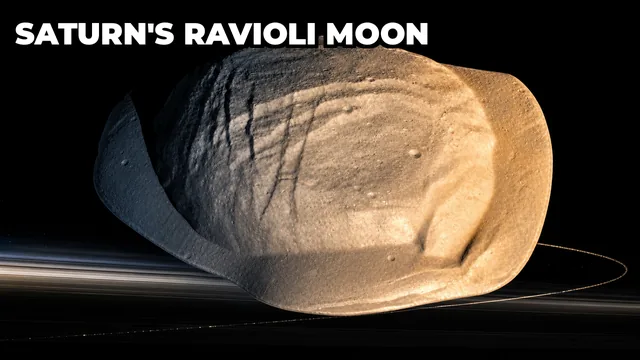 0:49
0:49Saturn Is Hiding A Moon Shaped Like Ravioli 🍝
Oct 3, 2026 0:32
0:32NASA Built It For 5 Flights. It Flew 72 On Mars 🚁
Sep 30, 2026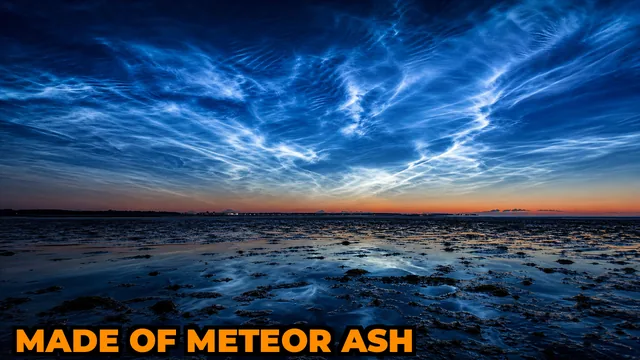 0:31
0:31The Cloud That Forms 52 Miles Up From Meteor Smoke ✨
Sep 30, 2026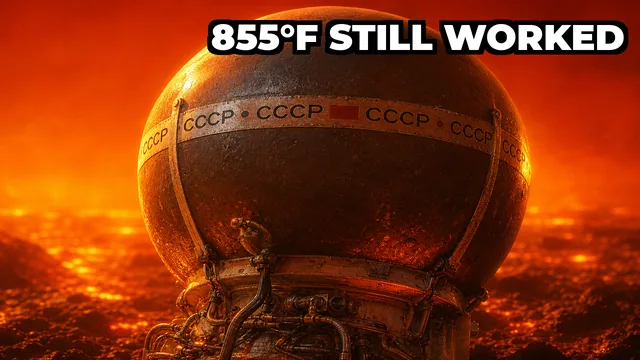 0:16
0:16The Only Color Photos Ever Taken On Venus 📸
Sep 27, 2026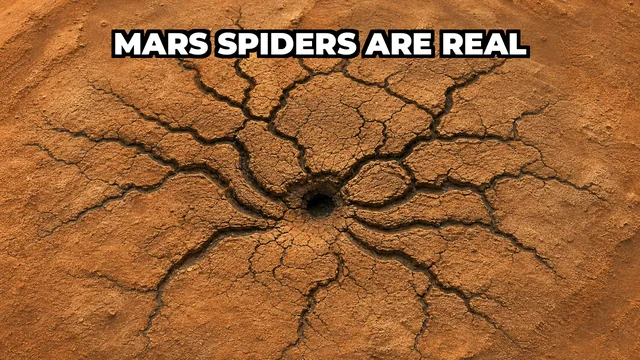 0:51
0:51Mars Grows 'Spiders' Every Spring 🕷️ Here's Why
Sep 26, 2026 0:23
0:23