What Made the Viking Ulfberht Swords So Superior to Other Medieval Weapons?
June 21, 2026
The Viking Ulfberht swords were superior to other medieval weapons because they were forged from crucible steel with virtually no slag impurities, making them nearly unbreakable compared to conventional Viking blades that were brittle and prone to shattering in combat.
The Revolutionary Steel Technology
While typical Viking-era swords were riddled with slag—trapped impurities that weakened the metal—Ulfberht swords contained almost none of these defects. This extraordinary purity came from crucible steel, a metallurgical achievement that European smiths wouldn’t master for nearly a thousand years. The steel’s near-perfect composition gave these weapons unprecedented durability and cutting power, making them the medieval equivalent of a technological breakthrough.
The Mystery of the Steel’s Origin
The source of this advanced steel remains one of archaeology’s greatest puzzles. Crucible steel of this quality was only produced in workshops located in present-day Iran and Central Asia during the Viking Age. The leading theory suggests Viking traders transported this precious material thousands of miles northward along the Volga trade route, but concrete evidence of this supply chain remains elusive.
Scholars have analyzed the chemical composition of surviving Ulfberht blades, finding trace elements that point to Central Asian or Middle Eastern origins. However, the exact workshops, trade agreements, and transportation methods that brought this steel to Scandinavian smiths remain unknown.
Medieval Counterfeiting and Brand Recognition
Remarkably, counterfeit Ulfberht swords circulated during the Viking Age itself, representing one of history’s earliest examples of brand forgery. These fakes bore the distinctive Ulfberht inscription but were crafted from inferior iron that lacked the superior properties of genuine blades. The existence of these counterfeits demonstrates that the Ulfberht name had already achieved prestige brand status over a millennium ago.
Archaeologists have discovered numerous fake Ulfberht swords across Europe, often identifiable by their poor craftsmanship and high slag content. This widespread counterfeiting suggests the genuine swords commanded premium prices and carried significant social status among Viking warriors and nobility.
The Abrupt End of Production
Around 1000 CE, authentic Ulfberht sword production ceased suddenly and completely. Historians believe this abrupt end coincided with the collapse of the Volga trade route after a powerful empire controlling the region was destroyed. Without access to the specialized crucible steel, Viking smiths could no longer produce these exceptional weapons.
This sudden termination of production supports the theory that the steel was imported rather than produced locally. If Scandinavian smiths had possessed the knowledge to create crucible steel themselves, production would likely have continued or at least declined gradually rather than stopping entirely.
Legacy and Ongoing Research
The Ulfberht swords represent a fascinating intersection of medieval trade, technology, and warfare. Modern metallurgists continue studying surviving examples, hoping to unlock the secrets of their construction and definitively identify their steel’s source. These weapons serve as tangible evidence of the sophisticated trade networks that connected medieval Europe with distant civilizations, challenging assumptions about the isolation of Viking Age societies.
FREQUENTLY ASKED
How many Ulfberht swords have been discovered? ▾
Archaeologists have found approximately 170 Ulfberht swords across Europe, though many are counterfeits made from inferior materials.
Why couldn't Viking smiths make their own crucible steel? ▾
The crucible steel technology required specialized knowledge, materials, and furnace designs that were closely guarded secrets in Central Asian and Middle Eastern workshops.
What does the Ulfberht inscription mean? ▾
The inscription likely represents either a maker's mark, a place name, or a brand identifier, though its exact meaning remains debated among scholars.
How can experts tell real Ulfberht swords from fakes? ▾
Genuine Ulfberht swords have virtually no slag content and superior steel composition, while counterfeits contain high levels of impurities and are made from inferior iron.
When were Ulfberht swords first made? ▾
The earliest known Ulfberht swords date to around 800 CE, with production continuing until approximately 1000 CE.
What happened to the Volga trade route? ▾
The Volga trade route collapsed around 1000 CE when political upheavals and the destruction of controlling empires disrupted the established trading networks.
GO DEEPER
KEEP EXPLORING
 0:50
0:50The Treasure Map Carved In Copper 🗺️ (64 Sites, 0 Found)
Sep 19, 2026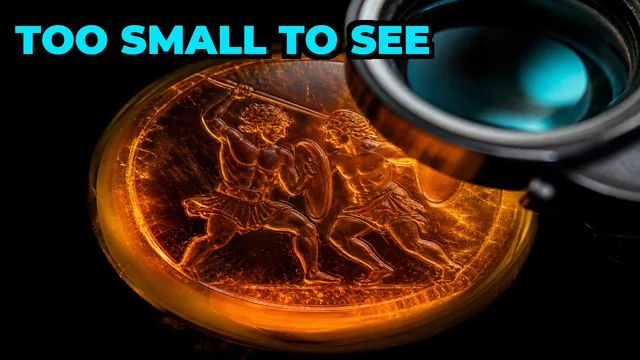 0:43
0:43This 3,500yr-Old Gem Hides Carvings Too Small To See 🔍
Sep 17, 2026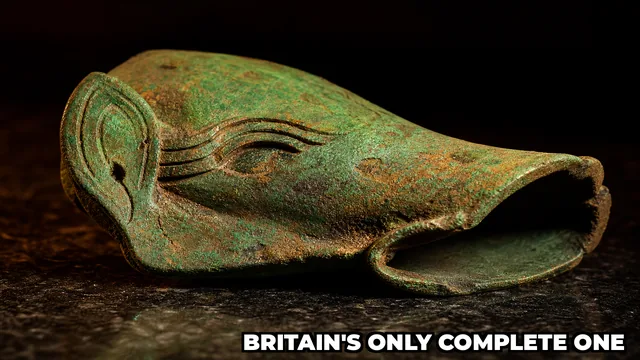 0:26
0:26Britain's Only Complete Celtic Battle Horn 🎺
Sep 17, 2026 0:42
0:42Archaeologists Found What 140 Years of Digging Missed 😱
Sep 16, 2026 0:39
0:399,000-Year-Old Figures Buried Face-Up 👁️ Why?
Sep 15, 2026 0:26
0:26