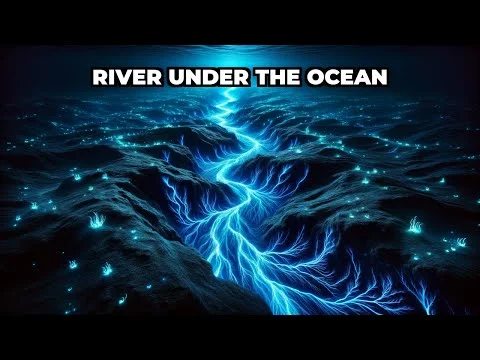
How Much Water Is Hidden Inside Earth?
March 30, 2026
Earth contains approximately three times more water trapped inside its mantle than exists in all surface oceans combined. This massive underground reservoir is locked within a mineral called ringwoodite, located roughly 400 miles beneath the surface in the mantle transition zone.
The Discovery of Earth’s Hidden Ocean
Scientists made this groundbreaking discovery by studying ringwoodite, a high-pressure mineral that forms under the extreme conditions found deep within Earth’s mantle. Unlike the liquid water we’re familiar with, this water exists in a chemically bound state within the crystal structure of the rock itself. The discovery came through seismic studies and laboratory analysis of rare ringwoodite samples found in meteorites and volcanic eruptions.
The mantle transition zone, located between 254 and 410 miles below Earth’s surface, experiences crushing pressures up to 23 gigapascals and temperatures exceeding 1,500 degrees Celsius. Despite these hellish conditions, water molecules remain stable when incorporated into ringwoodite’s crystalline structure.
How Earth’s Oceans May Have Formed
This underground water reservoir may hold the key to understanding how Earth’s oceans formed. Over billions of years, volcanic activity and tectonic processes have slowly transported water from the deep mantle to the surface. As ringwoodite moves through temperature and pressure gradients during geological processes, it releases its trapped water, which then makes its way toward the surface through various pathways.
This process suggests that Earth’s oceans didn’t primarily form from asteroid or comet impacts, as some theories propose, but rather from a gradual release of water that was present during the planet’s formation. The water cycle we observe today may be just the visible portion of a much larger, planet-wide system that includes this massive underground component.
The Scale of the Underground Reservoir
The sheer volume of water trapped in Earth’s mantle is staggering. If released all at once, this water could potentially cover the entire Earth’s surface to a depth far exceeding current ocean levels. However, this scenario is purely theoretical, as the geological processes that could release such quantities of water would require catastrophic planetary changes that are not geologically feasible under normal circumstances.
The discovery has revolutionized our understanding of Earth’s water cycle, suggesting it operates on a much deeper and more complex level than previously imagined. This finding also has implications for understanding water availability on other planets and the potential for life in seemingly unlikely environments.
Implications for Earth Science
This hidden water reservoir affects our understanding of plate tectonics, volcanic activity, and the long-term evolution of Earth’s surface. The presence of water in the mantle influences rock behavior, potentially making it more pliable and affecting how tectonic plates move and interact.
Furthermore, this discovery suggests that Earth’s water inventory is far more complex and extensive than surface observations alone would indicate, opening new avenues for research into deep Earth processes and their connection to surface phenomena.
FREQUENTLY ASKED
Where is the water hidden inside Earth located? ▾
The water is trapped in ringwoodite minerals in the mantle transition zone, approximately 400 miles beneath Earth's surface.
Could the underground water reservoir flood the Earth? ▾
While the volume is enormous, the water is chemically bound in rock and cannot be released all at once through any known geological process.
How did scientists discover water inside Earth? ▾
Scientists discovered it through seismic studies and laboratory analysis of ringwoodite samples from meteorites and volcanic material.