What Really Happens If You Fall Into a Black Hole?
March 28, 2026 · 4 min read
If you fall into a black hole, you would experience spaghettification (being stretched into a thin strand of matter), cross the event horizon where time behaves strangely, and eventually reach the singularity where physics breaks down completely. However, the exact experience depends on the size of the black hole and remains one of physics’ greatest unsolved mysteries.
Understanding Black Holes: Where Physics Meets the Impossible
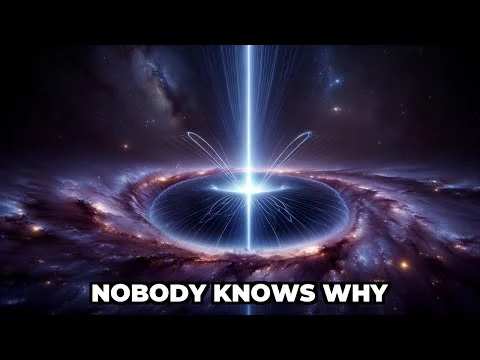
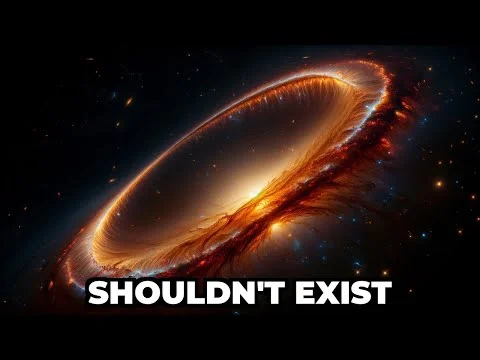
Black holes represent the most extreme environments in the universe, where gravity has become so intense that not even light can escape. These cosmic phenomena form when massive stars collapse, creating regions of spacetime so warped that our understanding of physics reaches its limits. The boundary surrounding a black hole, called the event horizon, marks the point of no return—once crossed, nothing can ever escape back to the outside universe.
The Approach: Spaghettification and Tidal Forces
As you approach a black hole, the first deadly effect you’d encounter is spaghettification. This occurs because the gravitational pull on your feet would be significantly stronger than the pull on your head, creating tidal forces that stretch your body into a thin strand of matter. For smaller stellar-mass black holes, this stretching would kill you before you even reach the event horizon.
However, supermassive black holes—the giants lurking at the centers of galaxies—present a different scenario. These behemoths are so massive that their tidal forces at the event horizon are surprisingly gentle. You could actually cross the point of no return without immediately feeling the deadly effects of spaghettification.
Time Dilation: The Universe in Fast Forward
One of the most mind-bending aspects of falling into a black hole involves time itself. According to Einstein’s general relativity, time passes more slowly in stronger gravitational fields. This creates a bizarre paradox: an outside observer watching you fall would never actually see you cross the event horizon. To them, you would appear to slow down, freeze at the boundary, and gradually fade away.
From your perspective, however, the experience would be completely different. You’d fall through the event horizon in a matter of seconds, with your watch ticking normally. Even stranger, as you approach the singularity, all the light from the future of the universe would converge into a single point ahead of you, potentially allowing you to witness billions of years of cosmic history compressed into moments.
The Information Paradox: Where Science Breaks Down
In 1974, Stephen Hawking discovered that black holes aren’t permanent—they slowly evaporate through a process now called Hawking radiation. This revelation created the Black Hole Information Paradox, one of physics’ most profound unsolved problems. Quantum mechanics states that information can never be truly destroyed, but if black holes evaporate completely, what happens to all the information that fell in?
This paradox has divided physicists for decades. Some propose that information is somehow encoded in the Hawking radiation, like reconstructing a burned book from its ashes. Others suggest the holographic principle, where all information falling into a black hole is preserved as a two-dimensional imprint on the event horizon.
The Firewall Paradox: Instant Annihilation
Recent theoretical work has introduced an even more disturbing possibility: the firewall paradox. Some physicists calculate that to preserve quantum mechanics and information conservation, the event horizon might not be the gentle boundary we imagine. Instead, it could be a wall of high-energy radiation that would instantly incinerate anything attempting to cross it.
Modern Discoveries and Ongoing Mysteries
The 2019 image of the supermassive black hole in galaxy M87, captured by the Event Horizon Telescope, confirmed many of Einstein’s predictions while raising new questions. The image revealed photons trapped in orbit around the black hole—light going nowhere, forever.
Today, physicists propose various scenarios for what happens inside black holes. Some suggest that space and time dimensions swap roles beyond the event horizon, making the singularity not a place but an inevitable moment in time. Others explore whether black hole interiors might be holographically encoded on their surfaces, preserving all information in a two-dimensional format.
The Ultimate Unknown
The truth is that we genuinely don’t know what happens if you fall into a black hole. These cosmic monsters exist precisely where Einstein’s general relativity and quantum mechanics—both proven correct in their respective domains—catastrophically contradict each other. Black holes represent the frontier where our understanding of reality breaks down, making them simultaneously the most terrifying and most important objects for advancing human knowledge.
Whoever solves the mysteries of black holes will likely revolutionize our understanding of space, time, and information itself—earning what many consider the greatest prize in the history of science.
FREQUENTLY ASKED
Would you die instantly if you fell into a black hole? ▾
It depends on the size of the black hole—smaller ones would kill you through spaghettification before you reach the event horizon, while supermassive black holes might allow you to cross the boundary relatively peacefully.
Can anything escape from a black hole? ▾
Nothing can escape once it crosses the event horizon, but black holes do emit Hawking radiation and eventually evaporate over extremely long time periods.
What is the singularity at the center of a black hole? ▾
The singularity is a theoretical point of infinite density where all physics equations break down and our understanding of space and time ceases to apply.