The Short Answer
Dinosaurs dominated Earth for over 150 million years yet almost never produced genuinely tiny species — a pattern researchers attribute to ecosystem pressures, poor fossil preservation of small bones, and an evolutionary bias toward gigantism that reasserted itself again and again across unrelated lineages.
A Group Built for Bigness
The earliest dinosaurs appeared during the Triassic Period, roughly 231 to 243 million years ago, and they started modestly — most weighed between 2 and 22 pounds. That small beginning is easy to misread. It was not a sign that dinosaurs were destined to stay small. Within a geologically short window, gigantism became the dominant trend, and it never meaningfully reversed. Patagotitan mayorum, a titanosaur from what is now Argentina, is the current heavyweight record-holder at an estimated 76 tons — roughly the weight of a fully loaded Boeing 747. Evolution kept returning to that direction across completely separate dinosaur families, on separate continents, in separate eras.
Tiny Dinosaurs Did Exist — But They Were Exceptional
Small species were not impossible. Epidexipteryx hui, a Jurassic dinosaur discovered in China, weighed approximately six ounces as a full-grown adult — lighter than a standard deck of cards. Remarkably, it still developed elaborate display feathers, suggesting that even the smallest dinosaurs were under pressure to compete and signal fitness. But cases like Epidexipteryx are so rare in the fossil record that they function more as anomalies than as evidence of a thriving small-body niche.
Island Dwarfism: When Giants Were Forced to Shrink
One of the clearest examples of dinosaur miniaturization comes from an ancient island in what is now Romania. Sauropods — typically among the largest animals that ever lived — became isolated from the mainland and shrank across generations through a process called island dwarfism. Magyarosaurus dacus, one of the species involved, was dramatically smaller than its mainland relatives. But even these so-called dwarf giants were not small animals by any normal measure. Island conditions could compress body size, but they could not push dinosaurs into true miniaturization. Something about dinosaur biology and ecology kept resisting that outcome.
The Fossil Record Problem
Here is where the mystery deepens. Paleontologists now widely suspect that thousands of truly tiny dinosaur species may have existed and simply vanished without leaving a trace. Small, delicate bones decay quickly. They are less likely to be buried in conditions that favor fossilization, less likely to survive millions of years of geological pressure, and far harder to detect when paleontologists survey a site. The fossil record is not a neutral archive — it is heavily biased toward large, dense bones. What we have is almost certainly a skewed sample of what actually lived.
Why the Bias Toward Gigantism?
Researchers point to several reinforcing factors. Large body size offers advantages in thermoregulation, predator defense, and access to food sources that smaller competitors cannot reach. For herbivorous dinosaurs especially, sheer size may have been the primary defense against predators, creating sustained selection pressure to grow bigger across generations. Meanwhile, the ecological niches typically occupied by small animals — insects, small reptiles, early mammals — were already filled by non-dinosaurian species throughout much of the Mesozoic. Dinosaurs may have simply had less room at the small end of the size spectrum.
What We Still Don’t Know
The full picture of dinosaur diversity may be far more extraordinary than the fossil record currently suggests. If preservation bias has hidden thousands of small species from us, then the dinosaur family tree is substantially incomplete. Future discoveries — particularly from fine-grained sedimentary deposits known to preserve delicate material — may eventually fill in that gap and reveal a world of tiny dinosaurs that evolution quietly tried, and mostly failed to remember.
FREQUENTLY ASKED
What is the smallest dinosaur ever discovered? ▾
Epidexipteryx hui, a Jurassic dinosaur from China, is among the smallest known non-avian dinosaurs, weighing only about six ounces as a full adult.
What is island dwarfism in dinosaurs? ▾
Island dwarfism occurs when large animals become isolated on an island and shrink over generations due to limited resources — Romanian sauropods like Magyarosaurus dacus are a well-documented dinosaur example.
How heavy was the largest dinosaur ever found? ▾
Patagotitan mayorum from Argentina is currently estimated to have weighed around 76 tons, making it the heaviest dinosaur yet discovered based on fossil evidence.
Why are small dinosaur fossils so rare? ▾
Small, lightweight bones decay faster and are far less likely to survive the fossilization process, creating a strong preservation bias toward larger species in the fossil record.
Did dinosaurs start out small before evolving to giant sizes? ▾
Yes — the earliest dinosaurs from the Triassic Period weighed between roughly 2 and 22 pounds, but gigantism emerged quickly and became the dominant evolutionary trend across many unrelated lineages.
Why didn't more dinosaurs evolve into small species? ▾
Researchers think ecological niches for small animals were already occupied by mammals and reptiles, while selection pressures like predator defense strongly favored larger body sizes in most dinosaur lineages.
GO DEEPER
KEEP EXPLORING
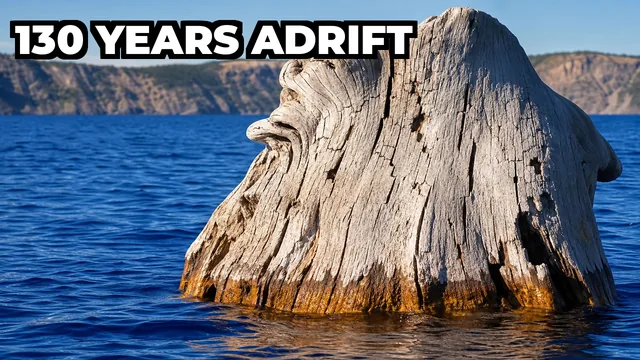 0:21
0:21This Log Has Drifted 62 Miles — And Nobody Stopped It 🪵
Sep 26, 2026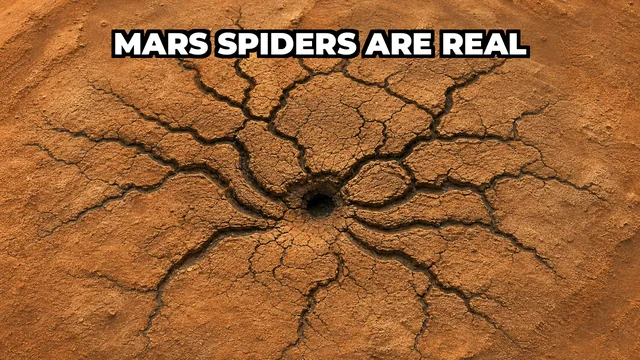 0:51
0:51Mars Grows 'Spiders' Every Spring 🕷️ Here's Why
Sep 26, 2026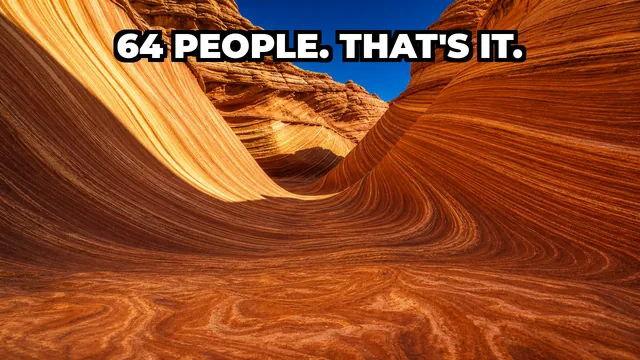 0:26
0:26Only 64 People a Day Can Enter This Place 🌊🪨
Sep 25, 2026 0:21
0:21This Bug Attracts More Bees Than Real Flowers 🌸
Sep 24, 2026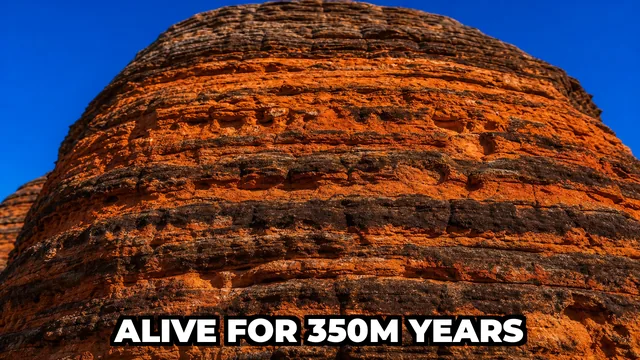 0:29
0:29The Stripes On These Rocks Are Actually Alive ✨
Sep 23, 2026 0:32
0:32