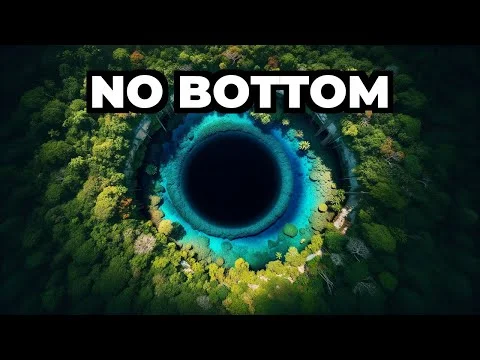
What Is the World's Largest Cave That Has Its Own Weather System?
March 27, 2026
What Is the World’s Largest Cave That Has Its Own Weather System?
Hang Son Doong in Vietnam is the world’s largest cave by volume and the only known cave system that generates its own weather patterns, including cloud formation, wind systems, and underground rainfall. This subterranean marvel remained hidden from the scientific community until 2009, despite being large enough to house entire city blocks.
The Scale of Hang Son Doong Cave
The sheer dimensions of Hang Son Doong defy comprehension. Stretching over 5 miles long, reaching heights of 650 feet, and widths of 500 feet in some sections, this cave system could easily accommodate a 40-story skyscraper with room to spare. To put this in perspective, the cave is so vast that entire Boeing 747 aircraft could fly through its largest chambers without touching the walls or ceiling.
Located in Phong Nha-Ke Bang National Park in central Vietnam, the cave formed over millions of years as underground rivers carved through limestone bedrock. The name “Hang Son Doong” translates to “Mountain River Cave,” reflecting the powerful water systems that continue to shape its interior today.
A Hidden Underground Ecosystem
What makes Hang Son Doong truly extraordinary is its self-contained ecosystem. Where sections of the cave ceiling have collapsed over millennia, massive skylights called “dolines” allow sunlight to penetrate hundreds of feet underground. These natural openings have created the impossible: a thriving jungle growing in complete isolation from the surface world.
This underground rainforest hosts species found nowhere else on Earth. Scientists have documented unique plant varieties and microbial life forms that evolved in complete isolation. The jungle areas, some reaching heights of 100 feet, create an otherworldly landscape that challenges our understanding of where life can flourish.
Weather Systems Underground
Perhaps most remarkably, Hang Son Doong generates its own weather patterns. The cave’s immense volume and temperature differentials between various chambers create air currents strong enough to form clouds. These clouds produce actual precipitation, creating underground rain systems that feed the cave’s rivers and support its unique ecosystem.
Temperature variations throughout the cave, combined with high humidity levels from underground waterways, establish microclimates that mirror surface weather patterns. Wind systems circulate air throughout the chambers, creating a dynamic atmospheric environment that exists nowhere else underground.
Scientific Discovery and Exploration
The cave was first discovered by local resident Ho Khanh in 1990, but its entrance was lost for nearly two decades. British cavers finally rediscovered and explored the system in 2009, revealing its record-breaking dimensions to the world. Even today, scientists continue mapping new passages and documenting previously unknown species.
Access to Hang Son Doong remains extremely limited, with only a handful of permitted expeditions each year. This restriction helps preserve the delicate ecosystem while allowing continued scientific research. The cave represents one of Earth’s last great frontiers, offering insights into geological processes, evolution, and the limits of life on our planet.
FREQUENTLY ASKED
How big is Hang Son Doong compared to other caves? ▾
Hang Son Doong is over twice the size of the previously largest known cave and could fit an entire New York City block including skyscrapers inside its chambers.
Can tourists visit Hang Son Doong cave? ▾
Very limited expeditions are permitted each year, requiring advanced technical caving skills and costing around $3,000 per person for the multi-day journey.
What unique species live in Hang Son Doong? ▾
Scientists have discovered endemic plant species and unique microbial life forms that evolved in isolation, though full cataloging of the ecosystem is ongoing.