The world’s largest living organism is Pando, a clonal colony of quaking aspen trees in Utah that appears as a forest but is actually a single organism with 47,000 tree trunks connected by one massive underground root system spanning 106 acres.
The Ancient Giant Hidden in Plain Sight
Located in Utah’s Fishlake National Forest, Pando (Latin for “I spread”) challenges our understanding of what constitutes a single living being. While visitors see what appears to be a typical aspen forest, scientists have determined through genetic analysis that every trunk shares identical DNA, making them all part of one colossal organism.
This remarkable entity weighs approximately 6 million kilograms (13.2 million pounds), making it not only the largest but also the heaviest known living organism on Earth. To put this in perspective, Pando weighs as much as about 40 blue whales combined.
An 80,000-Year Journey Through Time
Pando’s root system is estimated to be around 80,000 years old, making it one of the oldest living organisms on the planet. This ancient network has survived ice ages, climate changes, and countless environmental shifts by remaining largely underground and invisible.
The organism reproduces through clonal propagation, sending up new shoots from its extensive root system rather than relying on sexual reproduction through seeds. This strategy has allowed Pando to persist and expand slowly but steadily over millennia, creating new trunks while the original root system continues to thrive below ground.
The Science Behind Clonal Colonies
Clonal organisms like Pando represent a fascinating biological phenomenon where a single genetic individual can create what appears to be multiple separate plants or animals. In Pando’s case, each aspen trunk is technically a “ramet” – a genetic clone of the original organism.
This type of reproduction offers significant advantages, including genetic stability and the ability to quickly colonize suitable habitat. The interconnected root system allows nutrients and resources to be shared among all trunks, supporting weaker individuals and enabling the organism to respond collectively to environmental challenges.
A Survival Crisis in Modern Times
Despite surviving for 80 millennia, Pando now faces an unprecedented threat. Overgrazing by mule deer and elk is preventing new shoots from maturing into full-sized trees. These animals consume young aspens before they can grow large enough to survive, effectively preventing the natural regeneration that has sustained Pando for thousands of years.
Human activities have also altered the ecosystem balance. Fire suppression has eliminated the natural wildfire cycles that historically helped aspen groves regenerate, while human development has increased deer and elk populations by removing their natural predators.
Conservation Efforts and Future Prospects
Scientists and forest managers are working to protect Pando through various strategies, including fencing areas to exclude grazing animals and conducting controlled burns to stimulate new growth. Some sections of the colony have been enclosed to allow young shoots to mature without interference.
The fate of this ancient organism serves as a powerful reminder of how quickly environmental changes can threaten even the most resilient life forms. Pando’s story illustrates the delicate balance between species and their ecosystems, and the unexpected ways that human activities can impact natural systems.
FREQUENTLY ASKED
How big is Pando compared to other large organisms? ▾
Pando weighs approximately 6 million kilograms, making it roughly 40 times heavier than a blue whale and significantly larger than any other known living organism.
How do scientists know Pando is one organism and not separate trees? ▾
Genetic testing revealed that all 47,000 trunks share identical DNA, proving they are clones connected by a single root system rather than individual trees.
Can you visit Pando in Utah? ▾
Yes, Pando is located in Utah's Fishlake National Forest and is accessible to visitors, though it looks like a normal aspen grove to casual observers.
Are there other organisms like Pando in the world? ▾
Yes, other clonal colonies exist, including Armillaria fungi and some shrubs, but none approach Pando's size, weight, or age.
What would happen if Pando dies completely? ▾
If Pando's root system dies, the entire 106-acre colony would disappear, representing the loss of an 80,000-year-old genetic lineage that cannot be replaced.
How fast does Pando grow and spread? ▾
Pando expands very slowly, typically adding new shoots within its existing boundaries rather than expanding outward, with growth rates measured over decades or centuries.
GO DEEPER
KEEP EXPLORING
 0:52
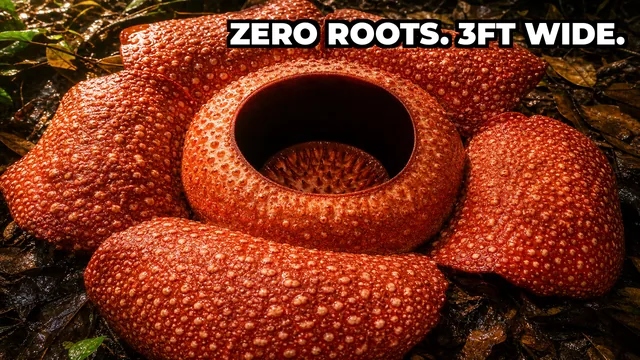
0:52A 24 lb Flower With No Roots Tricks Flies 😱
Oct 20, 2026 0:52
0:52Termites or Thirsty Grass? The Desert Can't Decide 🔵
Oct 19, 2026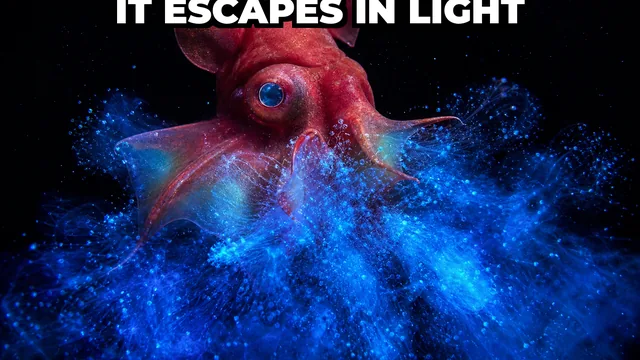 0:38
0:38The Vampire Squid Escapes in a Cloud of Light 🦑
Oct 19, 2026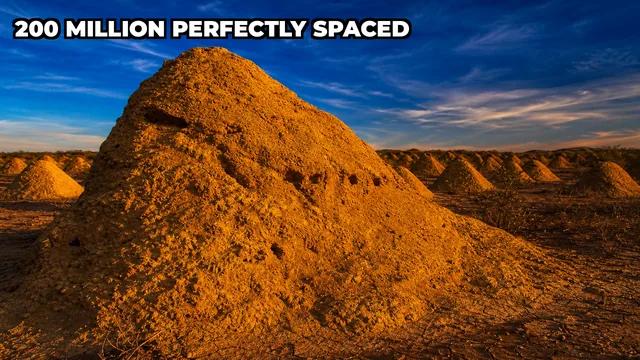 0:38
0:38200 Million Termite Mounds, Some 3,800 Years Old 🐜
Oct 17, 2026 0:36
0:36Why This Frog Packs Its Cells With Sugar 🐸🔬
Oct 16, 2026 0:58
0:58