The world’s oldest gold treasure is the Varna Necropolis in Bulgaria, dating back 6,500 years and containing over 3,000 individual gold objects. This prehistoric burial site predates Egyptian gold artifacts by approximately 1,500 years and held more gold than existed in the entire rest of the world at the time.
The Accidental Discovery That Changed History
In 1972, construction worker Raycho Marinov was operating an excavator near Varna, Bulgaria, when he struck something unusual in the soil. What seemed like routine construction work turned into one of archaeology’s most significant discoveries. The site he uncovered would fundamentally challenge our understanding of prehistoric civilizations and the origins of metallurgy.
The excavation revealed a massive necropolis spanning the Chalcolithic period (Copper-Stone Age), containing over 300 individual burials. What made this discovery extraordinary wasn’t just its age, but the unprecedented wealth it contained.
An Ancient Society of Unprecedented Sophistication
The Varna Necropolis contains more than 3,000 gold objects with a combined weight of approximately 6 kilograms. These artifacts demonstrate a level of craftsmanship and social organization that archaeologists previously thought impossible for such an ancient civilization.
Grave 43 stands out as particularly remarkable, containing nearly 990 gold objects in a single burial. The deceased was adorned with a gold diadem, gold appliqués sewn onto clothing, and accompanied by copper axes and flint tools. Shell ornaments found at the site had been traded from hundreds of kilometers away, indicating extensive trade networks.
The Mystery of the Empty Graves
Perhaps the most intriguing aspect of the Varna Necropolis is the presence of cenotaphs—graves containing rich grave goods but no human remains. These symbolic burials were filled with gold objects, weapons, and ceremonial items, possibly representing individuals who died far from home or held special status in society.
These empty graves suggest complex burial rituals and beliefs about the afterlife that were far more sophisticated than previously attributed to Chalcolithic societies. The practice indicates a culture with developed religious concepts and social hierarchies.
Implications for Our Understanding of Prehistory
The Varna gold predates the famous treasures of ancient Egypt by over a millennium, forcing archaeologists to reconsider the timeline of human technological and social development. The site provides evidence that complex, hierarchical societies with advanced metallurgical skills existed in Europe much earlier than previously believed.
The quality and quantity of gold artifacts suggest that the Varna culture had not only mastered gold-working techniques but had also developed sophisticated mining operations. The social stratification evident in the burial practices indicates a civilization with established ruling classes and specialized craftspeople.
Ongoing Archaeological Significance
What makes the Varna Necropolis even more exciting is that archaeologists believe only a fraction of the site has been excavated. Ground-penetrating radar and other modern techniques suggest that significant portions of the necropolis remain buried, potentially containing even more treasures and insights into this ancient civilization.
The site continues to yield new discoveries, with ongoing excavations revealing additional burials and artifacts that further illuminate the sophisticated nature of this prehistoric society.
FREQUENTLY ASKED
How old is the Varna Necropolis gold? ▾
The Varna Necropolis gold is approximately 6,500 years old, dating to the Chalcolithic period and predating Egyptian gold by about 1,500 years.
How much gold was found at Varna Necropolis? ▾
Over 3,000 individual gold objects weighing approximately 6 kilograms were discovered, with one grave alone containing nearly 990 gold pieces.
Who discovered the Varna Necropolis? ▾
Construction worker Raycho Marinov accidentally discovered the site in 1972 while operating an excavator near Varna, Bulgaria.
What are cenotaphs in the Varna Necropolis? ▾
Cenotaphs are symbolic graves at Varna that contain rich burial goods like gold objects and weapons but no human remains. These empty graves likely represented individuals who died far from home or held special status in society.
Which grave at Varna contained the most gold objects? ▾
Grave 43 contained nearly 990 gold objects in a single burial, making it the richest individual grave at the site. The deceased was adorned with a gold diadem, gold appliqués sewn onto clothing, and accompanied by copper axes and flint tools.
How does Varna gold compare to Egyptian gold artifacts? ▾
The Varna gold predates famous Egyptian gold treasures by over 1,500 years, making it significantly older. At the time of its creation, the Varna site held more gold than existed in the entire rest of the world.
GO DEEPER
KEEP EXPLORING
 0:42
0:42They Paved a Roman Road With a 7ft Ancient Statue 🏛️
Oct 6, 2026 0:49
0:49This Iron Pillar Refused To Rust For 1,600 Years ⚙️
Oct 5, 2026 0:52
0:52A 160-Ton Obelisk Flew Home After 68 Years ✈️
Oct 4, 2026 0:19
0:19They Built A 41ft Ring From 60 Mammoths 🦣
Oct 3, 2026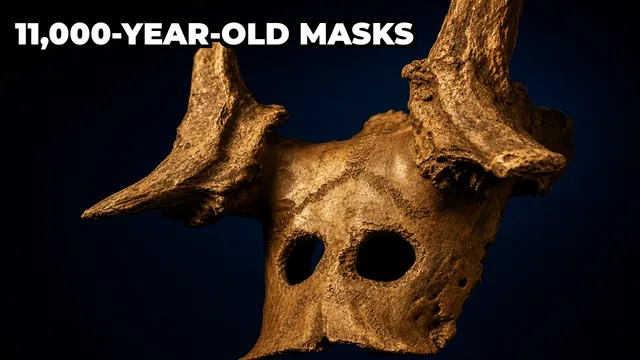 0:05
0:0533 Deer Skull Masks — 11,000 Years Old 🦌😱
Oct 2, 2026 0:34
0:34