What Did Archaeologists Find Inside a 1,400-Year-Old Zapotec Tomb in Mexico?
July 18, 2026
What Was Found in the Zapotec Tomb?
Archaeologists from Mexico’s national archaeology institute, INAH, uncovered a sealed 1,400-year-old Zapotec stone burial chamber in San Pablo Huitzo, Oaxaca — a tomb untouched since approximately 600 CE that offers a rare window into one of Mesoamerica’s most sophisticated early civilizations.
Who Were the Zapotec?
The Zapotec were one of the oldest and most advanced civilizations in ancient Mesoamerica. Long before the Aztec Empire rose to power, the Zapotec had already developed one of the earliest writing systems in the Americas, constructed monumental architecture, and dominated the valleys of what is now Oaxaca, Mexico. Their civilization flourished for over a thousand years, making them not a footnote in history but its opening chapter.
Unlike many ancient cultures whose records were erased or absorbed, the Zapotec left behind durable evidence of their sophistication — carved stone inscriptions, elaborate ceramics, and, crucially, stone tombs built for their most powerful dead.
Why Does This Tomb Matter?
Stone burial chambers were not built for everyone. In Zapotec society, only the elite — rulers, high priests, and individuals of exceptional status — were interred in cut stone tombs designed to endure indefinitely. The discovery of one sealed and intact in San Pablo Huitzo is significant precisely because of that rarity. The tomb had remained undisturbed for more than fourteen centuries, preserving its contents in something close to their original state.
The site of San Pablo Huitzo sits in the Etla Valley of Oaxaca, a region long associated with Zapotec political and cultural power. Finding an elite burial here reinforces what archaeologists have long suspected: that this valley was home to a network of powerful Zapotec communities with deep roots and far-reaching influence.
What Can Science Reveal Next?
The excavation is only the beginning. Researchers plan to conduct genetic and isotopic analysis on the skeletal remains inside the chamber. These techniques can answer questions that surface archaeology cannot. Was the individual buried here a local ruler whose family had governed this valley for generations? Or were they a long-distance migrant — someone who had traveled from another region and risen to elite status? The answers could reshape what we know about Zapotec trade networks, political alliances, and social mobility.
Isotopic analysis works by examining ratios of chemical elements preserved in bone and teeth, which reflect the geography of where a person lived during childhood. If the isotopic signature does not match the local geology of Oaxaca, it would suggest the buried individual originated elsewhere — a finding with major implications for understanding how Zapotec power networks functioned across ancient Mesoamerica.
A Civilization Still Being Understood
The Zapotec are sometimes overshadowed in popular history by the Maya and Aztec, but their contributions to Mesoamerican civilization are foundational. Their writing system predates Aztec script by more than a thousand years. Their urban center at Monte Albán, visible from across the Oaxaca Valley, was one of the earliest cities in the Americas. And their tombs — like the one just opened in San Pablo Huitzo — are still yielding discoveries that force historians to revise what they thought they knew.
This is not simply the opening of an old grave. It is the reopening of a conversation with one of the ancient world’s most consequential civilizations.
FREQUENTLY ASKED
Where was the 1,400-year-old Zapotec tomb found? ▾
The tomb was discovered in San Pablo Huitzo in the Etla Valley of Oaxaca, Mexico, by archaeologists from INAH, Mexico's national archaeology institute.
How old is the Zapotec writing system? ▾
The Zapotec writing system is one of the oldest in Mesoamerica, predating the Aztec Empire's script by over a thousand years and dating back more than 2,500 years.
Who was buried in Zapotec stone tombs? ▾
Stone burial chambers were reserved exclusively for the Zapotec elite — rulers, high priests, and other individuals of the highest social and political status.
What is isotopic analysis and why is it used on ancient remains? ▾
Isotopic analysis examines chemical element ratios preserved in bones and teeth to determine where a person lived during childhood, helping archaeologists identify whether ancient individuals were local or long-distance migrants.
What is the significance of Monte Albán to the Zapotec civilization? ▾
Monte Albán was the Zapotec's great urban center in Oaxaca and one of the earliest cities in the Americas, serving as the political and ceremonial heart of their civilization for over a thousand years.
How does the Zapotec civilization compare to the Aztec and Maya? ▾
The Zapotec predate both the Aztec and, in terms of their writing and urban development, rival the early Maya — making them one of Mesoamerica's foundational civilizations rather than a successor culture.
GO DEEPER
KEEP EXPLORING
 0:43
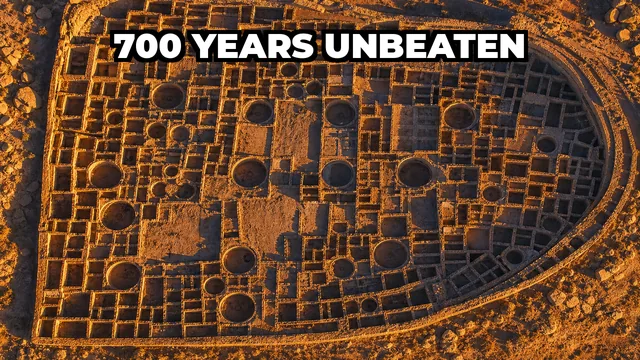
0:43Why Build 600 Rooms for 70 People? 🏛️
Oct 23, 2026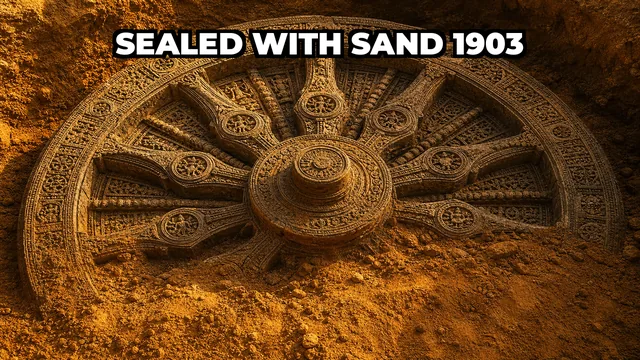 0:36
0:36The 1250 Stone Chariot With Iron Beams Inside 🏛️
Oct 22, 2026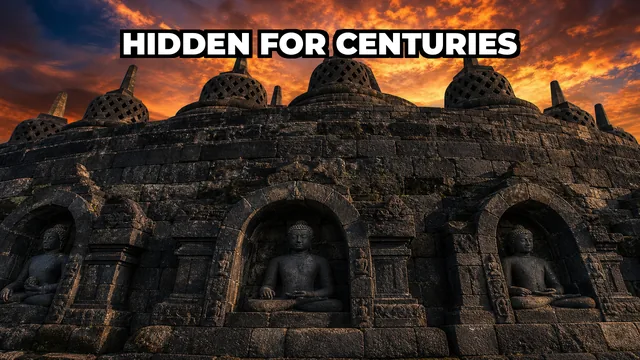 0:02
0:02504 Buddhas. Zero Mortar. Hidden for Centuries 🏛️
Oct 21, 2026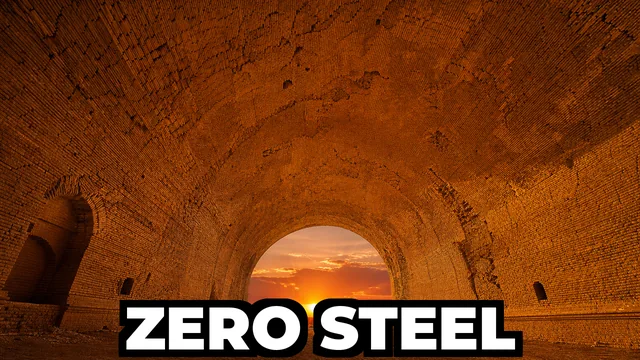 0:53
0:53121ft Tall — No Steel, No Framework 🏛️
Oct 20, 2026 0:54
0:54Two Crews Dug Blind Through a Mountain — And Met 🏔️
Oct 18, 2026 0:57
0:57