Zealandia is Earth’s hidden eighth continent—a 4.9 million square kilometer landmass that lies 94% submerged beneath the Pacific Ocean. Scientists officially recognized it as a continent in 2017, making it the youngest continent to be formally identified.
The Discovery of Earth’s Hidden Continent
For centuries, explorers sailed over Zealandia without realizing what lay beneath the waves. In 1642, Dutch explorer Abel Tasman became the first European to sight New Zealand, completely unaware he was navigating along the peaks of a massive sunken continent. It wasn’t until 2017 that scientists finally confirmed Zealandia met all the geological criteria to be classified as a continent.
The continent stretches across roughly the same area as the Indian subcontinent, making it substantial enough to qualify for continental status despite being largely underwater. New Zealand and New Caledonia represent the only significant portions of Zealandia that remain above sea level today.
How Zealandia Disappeared Beneath the Waves
Zealandia’s submersion wasn’t a sudden catastrophe—it was a geological process that unfolded over millions of years. The continent’s crust measures between 10 and 30 kilometers thick, significantly thinner than other continental crusts. This structural weakness caused Zealandia to gradually sink beneath the Pacific Ocean as tectonic forces shifted and sea levels changed.
The continent began its descent approximately 23 million years ago, slowly disappearing beneath the waves while other landmasses remained above water. This gradual submersion preserved much of Zealandia’s geological structure, creating an underwater landscape complete with mountains, plains, and valleys.
Scientific Evidence from the Ocean Floor
In 2017, scientists conducted a groundbreaking expedition to drill into Zealandia’s seafloor. Their research yielded remarkable discoveries, including fossilized pollen and spores from ancient land plants. This evidence proved that Zealandia was once a thriving terrestrial environment covered in vegetation, supporting the theory that it was indeed a fully-formed continent before its submersion.
The fossil evidence also revealed important information about ancient climate patterns and biodiversity in the region. These findings help scientists understand how continental drift and ocean level changes have shaped our planet over geological time.
Zealandia’s Geological Significance
Zealandia meets all four criteria that define a continent: elevation above the surrounding area, distinctive geology, a well-defined area, and a crust thicker than typical ocean floors. Despite being underwater, Zealandia’s continental crust is clearly distinct from the oceanic crust surrounding it.
The continent’s discovery has significant implications for our understanding of plate tectonics and continental formation. It demonstrates that continents can exist in various states and that our planet’s geological history is more complex than previously understood.
Ongoing Research and Future Discoveries
Scientists continue to study Zealandia using advanced underwater mapping technology and deep-sea drilling techniques. Each expedition reveals new information about this hidden continent’s history, structure, and the life forms that once inhabited its surface.
The discovery of Zealandia raises intriguing questions about what other geological features might be hidden beneath our oceans. As technology advances, researchers may uncover additional underwater continents or significant geological formations that could reshape our understanding of Earth’s structure.
FREQUENTLY ASKED
How much of Zealandia is underwater? ▾
Approximately 94% of Zealandia is submerged beneath the Pacific Ocean, with only New Zealand and New Caledonia representing the visible portions above sea level.
When did Zealandia sink below the ocean? ▾
Zealandia began sinking approximately 23 million years ago through a gradual geological process that occurred over millions of years due to its thin continental crust.
Why wasn't Zealandia discovered until 2017? ▾
While parts of Zealandia like New Zealand were known for centuries, it wasn't until 2017 that scientists had sufficient geological evidence and mapping technology to confirm it met all criteria for continental classification.
What makes Zealandia qualify as a continent instead of just an underwater landmass? ▾
Zealandia meets all four criteria that define a continent: elevation above the surrounding area, distinctive geology, a well-defined area, and a crust thicker than typical ocean floors. Its continental crust is clearly distinct from the oceanic crust surrounding it, despite being underwater.
How big is Zealandia compared to other continents? ▾
Zealandia stretches across 4.9 million square kilometers, roughly the same area as the Indian subcontinent. This makes it substantial enough to qualify for continental status despite being largely submerged.
What parts of Zealandia can you actually visit above water? ▾
New Zealand and New Caledonia represent the only significant portions of Zealandia that remain above sea level today. These landmasses are essentially the peaks of the submerged continent.
GO DEEPER
KEEP EXPLORING
 0:42
0:42These Dunes BOOM Like Thunder For Miles 🔊
Sep 18, 2026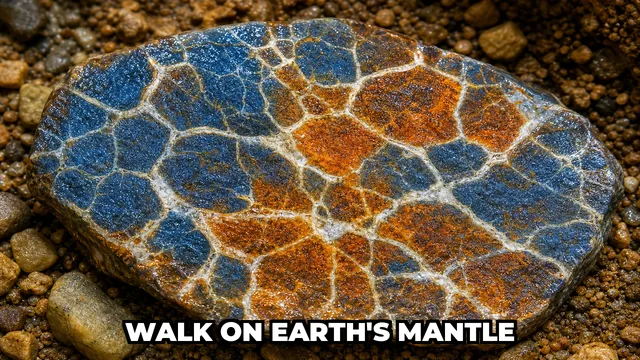 0:51
0:51You Can Hike On Earth's Mantle Right Now 🌍
Sep 16, 2026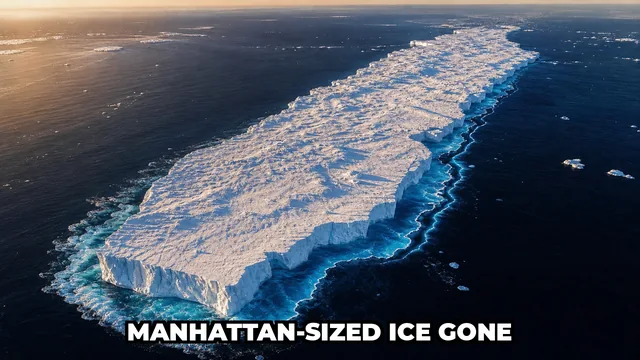 0:28
0:28🧊 Manhattan-Sized Ice Island Broke Off Greenland
Sep 12, 2026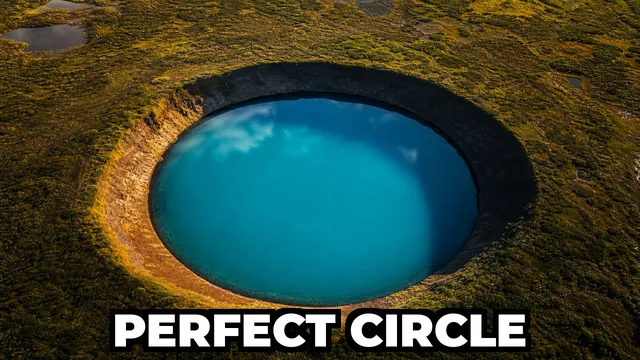 0:40
0:40This Crater Has No Business Being This Round 🔵
Sep 8, 2026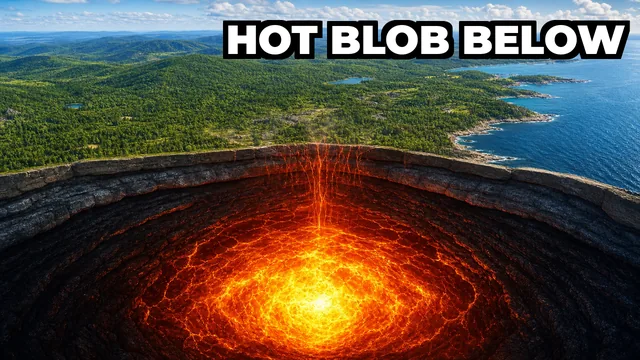 0:39
0:39A Hot Blob Is Pushing Up New England 🌋
Aug 28, 2026 0:19
0:19